HDD installs pipelines beneath live roads, utilities and waterways without a single open trench. Here is how the method works and why it has become the default for UAE infrastructure.
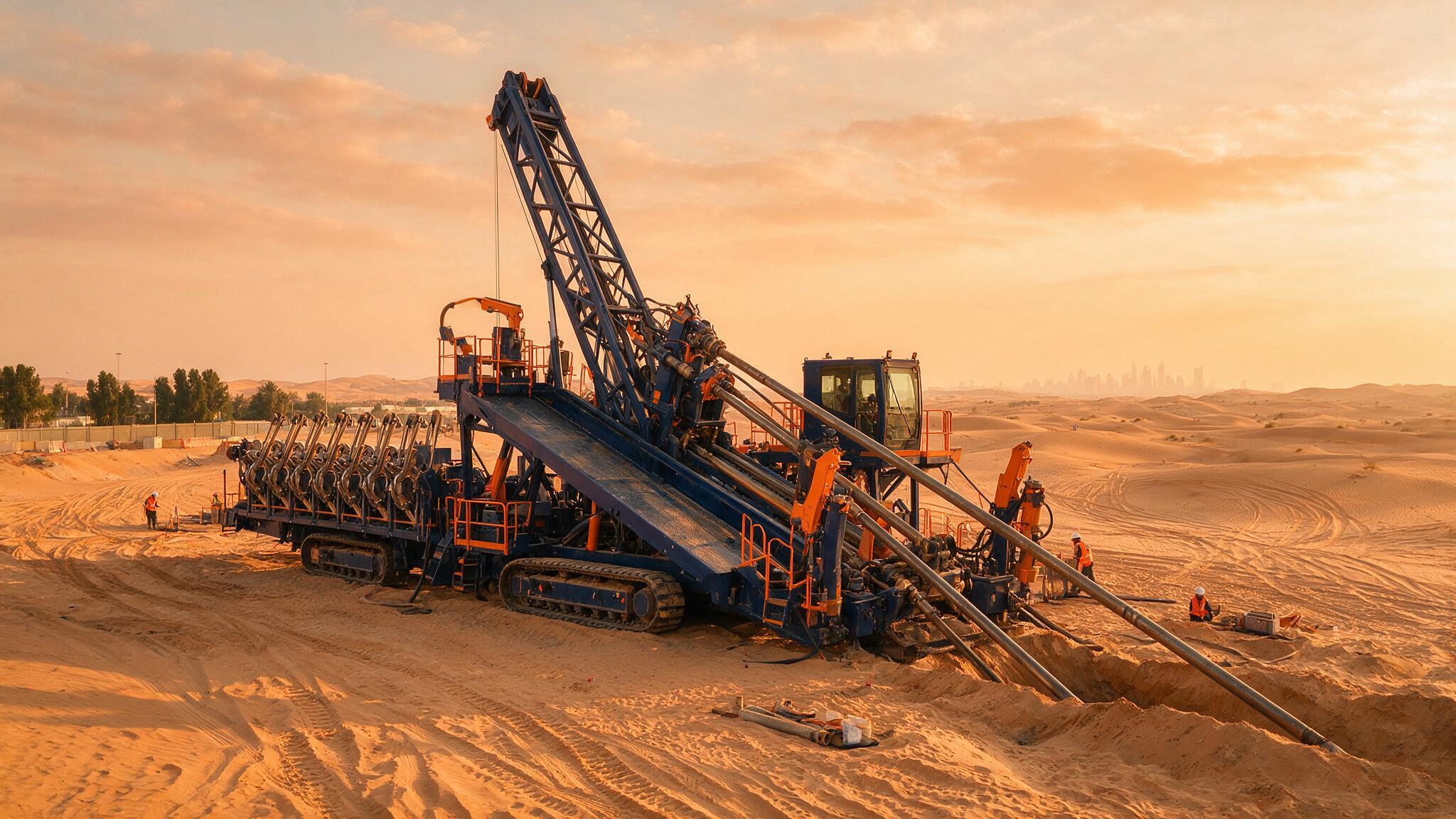
Horizontal directional drilling, or HDD, is a trenchless construction method that installs pipelines, cables and ducts along a shallow curved path beneath the surface. Instead of cutting an open trench across a road or a channel, the crew drills from an entry pit on one side to an exit point on the other, then pulls the product pipe back through the finished bore.
In the UAE this matters more than almost anywhere else. The road network in Abu Dhabi and Dubai carries some of the heaviest traffic in the region, and closing a carriageway for weeks of open-cut work is rarely acceptable to the municipality or to the public. Beneath those roads sits one of the densest utility corridors in the world: power transmission, potable water, sewerage, telecom, chilled water and gas often share the same few metres of ground.
HDD threads new infrastructure through that congestion without disturbing what is already there. The bore path is engineered around existing services, verified against utility records and live scans, and steered in real time from the surface. Traffic keeps moving, businesses stay open, and landscaping, kerbs and pavements remain untouched except at the two small entry and exit workpits.
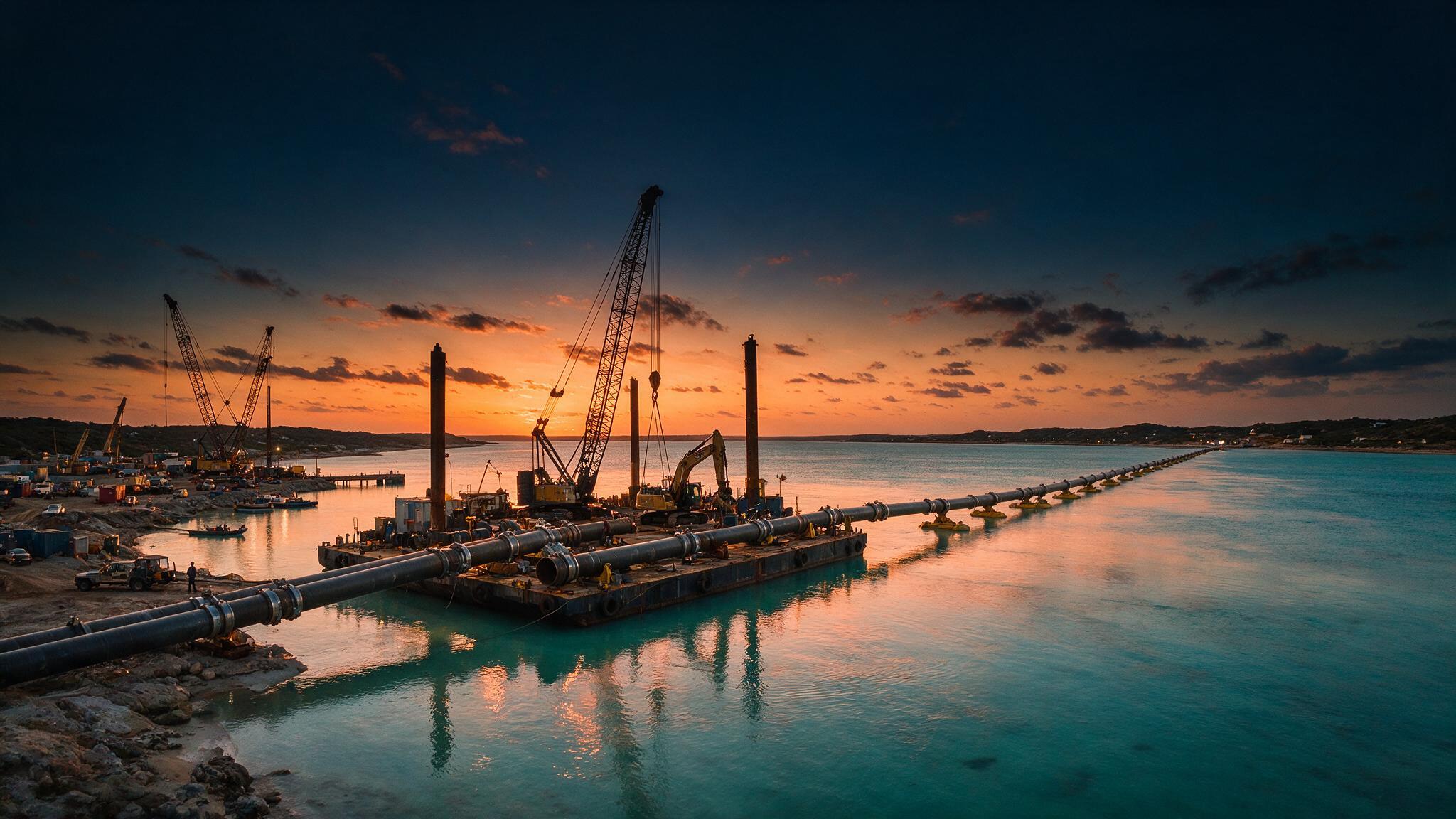
The method also handles obstacles that open-cut simply cannot: sea channels, creeks, major interchanges and protected areas. For asset owners such as ADNOC, TRANSCO and ADDC, trenchless crossings have moved from an alternative to the expected standard. That is the environment Crossroad Drilling was built for, and it is why every project we deliver begins with the same question: what is the cleanest path under, not through.