Rig selection is where crossings are quietly won or lost. Too small risks a stuck pipe, too large wastes money and space. How length, diameter, soil and site decide the machine.
Every crossing has a right-sized machine, and finding it is one of the most consequential early decisions on an HDD project.
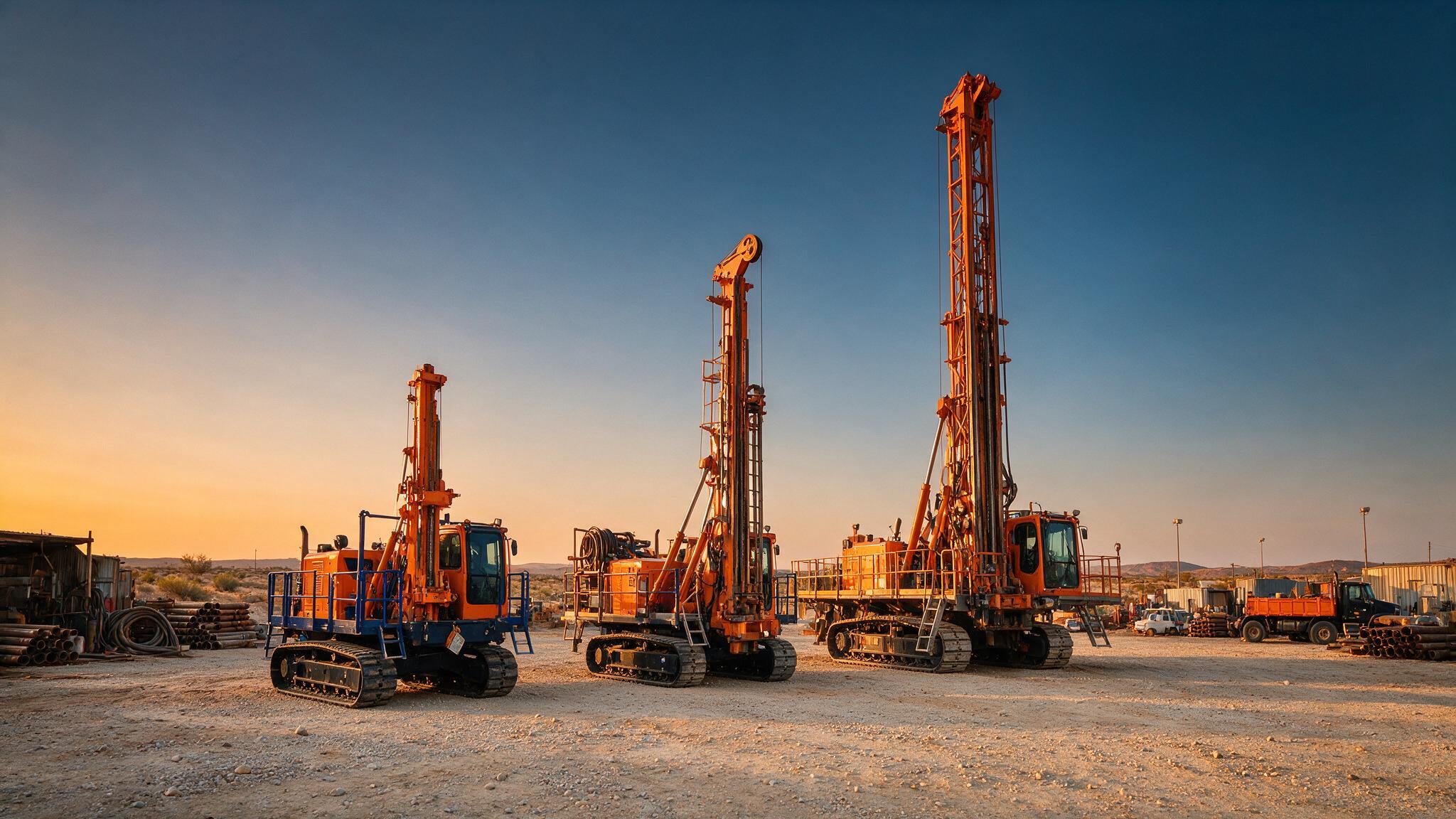
The industry sorts rigs into three broad classes. Mini rigs, compact machines in roughly the 10 to 20 tonne pullback range, are the urban workhorses: small footprint, fast mobilisation, ideal for service crossings, cable ducts and shorter road bores where space is tight. Midi rigs, roughly 20 to 60 tonnes of pullback, carry the middle of the market, handling longer road and interchange crossings and medium-diameter pipelines. Maxi rigs, from around 100 tonnes upward, exist for the crossings everything else cannot touch: long large-diameter bores, deep profiles and marine crossings measured in the hundreds of metres.
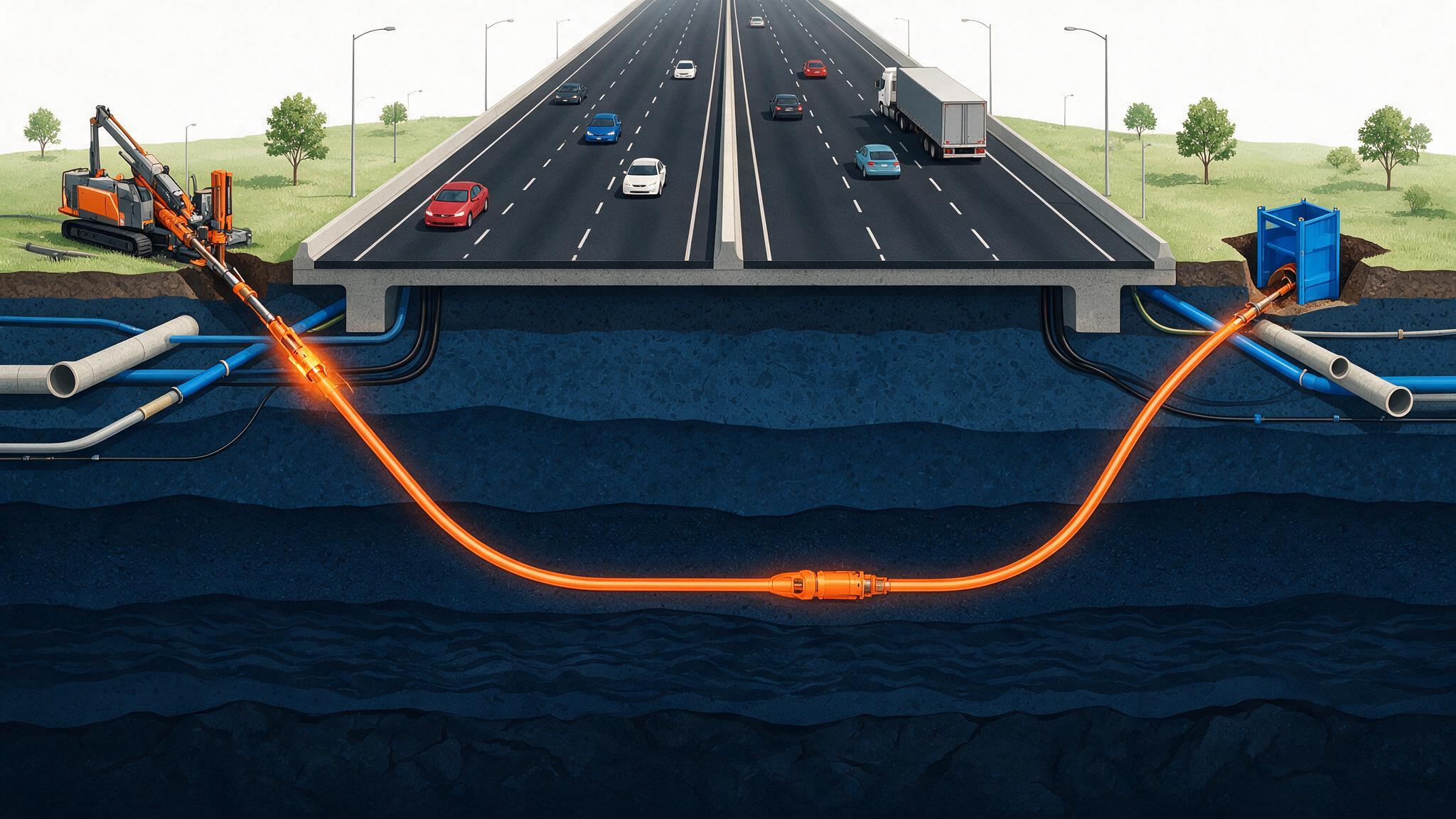
Four factors drive the selection. Crossing length and product diameter together set the theoretical pull load, which the rig must exceed with a healthy safety margin, because calculated loads assume a clean bore and real bores are not always clean. Soil conditions adjust that margin: reactive clays that swell onto the pipe, or gravels that resist a stable hole, both push the choice upward. Finally the site itself votes: a maxi rig needs laydown space for pipe string, mud plant and anchoring that a city verge simply cannot offer.
The honest rule is to size for the crossing you have, then step up one class if any factor sits near a boundary. Rig time is cheap compared to a stuck product pipe.
Crossroad's fleet spans this whole range, from compact urban units through mid-class machines to a 250 tonne maxi rig for channel work, precisely so the machine can be matched to the bore rather than the bore compromised to fit the machine. The right rig makes a hard crossing routine. The wrong one makes a routine crossing hard.