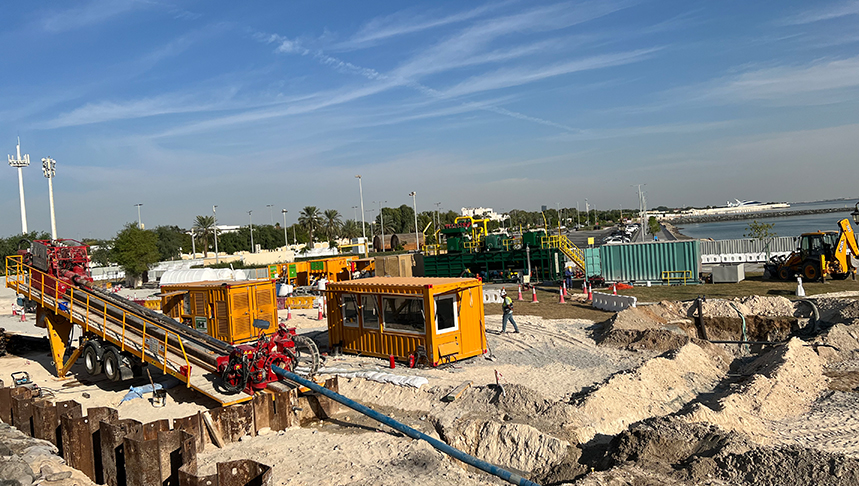
Herrenknecht HK 250T
Maxi rig, 250 ton pullbackOur heavyweight for long, large-diameter and sea channel crossings.

CAPABILITY 05 / 06 · Drilling fluid engineering
Engineered bentonite and polymer programmes, mixed and recycled on site, matched to the sands, clays and caprock of the Gulf.
THE SCOPE
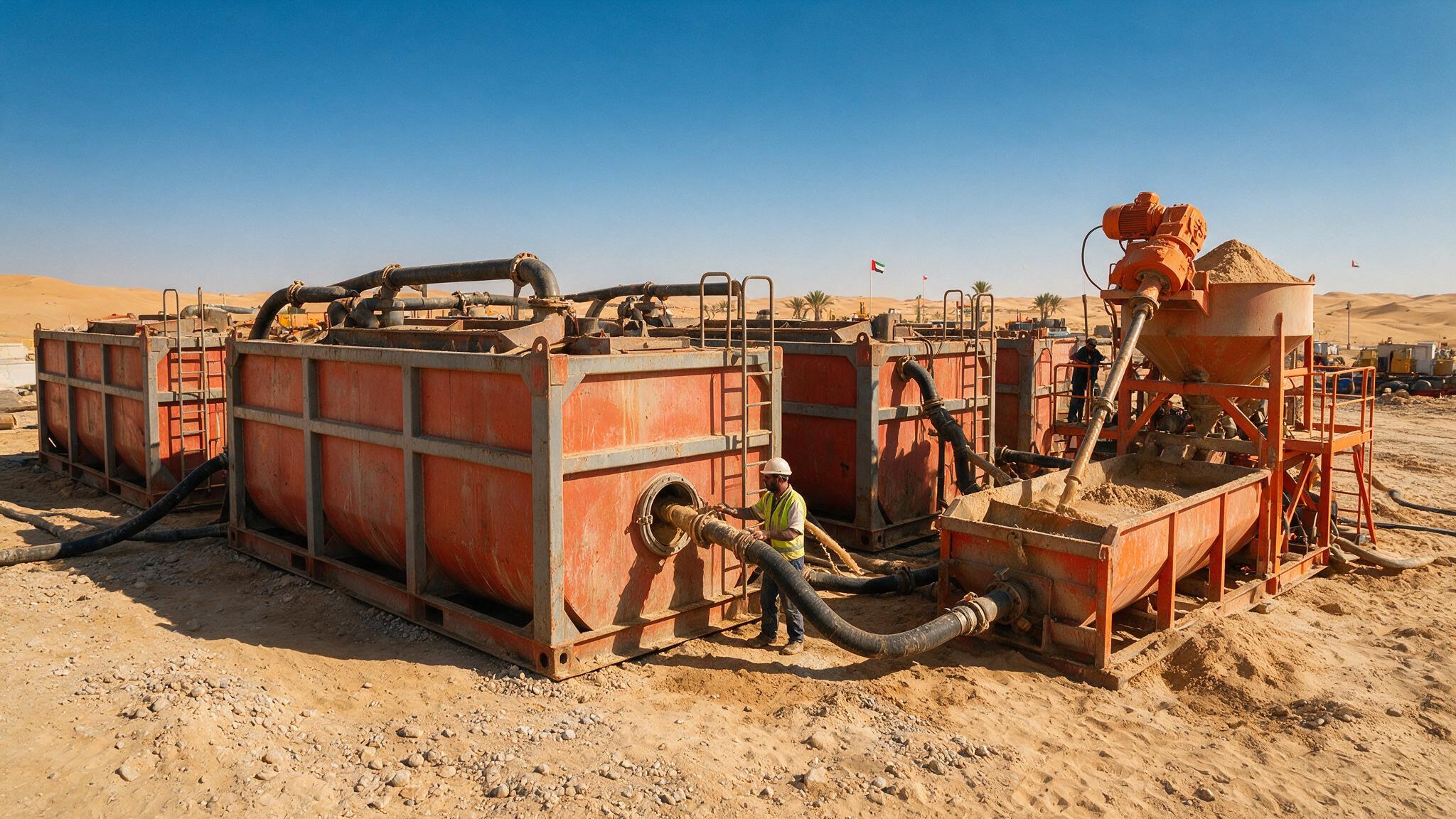
Drilling fluid is the part of HDD nobody sees and everything depends on. It stabilises the bore wall, carries cuttings out, cools and lubricates the tooling, and reduces the pull load on the pipe. Get it wrong in loose Gulf sand and the bore collapses; get it wrong in reactive clay and the reamer balls up. Crossroad runs its own mixing and recycling plants and designs the fluid programme per crossing from the geotechnical data.
Bentonite concentration, polymer additives, viscosity and pH are set for the strata and adjusted as the bore progresses, with returns monitored at both pits. Recycling units separate cuttings and return cleaned fluid to the tanks, which cuts water consumption and disposal volumes on long crossings. Annular pressure is kept below the formation fracture limit so there are no inadvertent returns at the surface or into the channel bed.
WHAT WE DELIVER
HOW IT RUNS
Strata, bore length and pipe size set the base fluid and additives; volumes are estimated per pass.
Fluid is mixed on site, tested and conditioned before the pilot bore starts.
Returns, pressure and fluid properties are checked through every pass and the programme is tuned.
Cuttings are separated, fluid is recycled, and residues are removed to the approved disposal route.
See the full four-stage bore animated on the home page, or size your own crossing with the HDD tools.
IRON ON THE JOB
Our heavyweight for long, large-diameter and sea channel crossings.
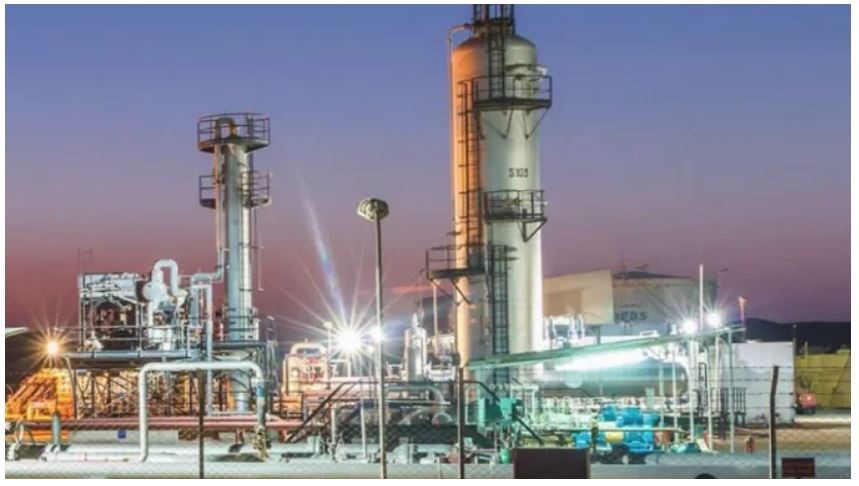
The workhorse for utility corridors and mid-range road crossings.

Engineered mud programs matched to UAE soil strata.
ON RECORD
STRAIGHT ANSWERS
Engineers answer every enquiry. If your question is not here, send it over.
Between 1.5 and 3.5 times the reamed hole volume depending on the ground: reactive clay at the low end, clean sand and gravel at the high end. The fluid estimator on our tools page gives a planning figure.
It is recycled through solids-control units during the bore and the remaining slurry is removed by tanker to an approved disposal site. Nothing is discharged to the ground, drains or the sea.
Inadvertent returns happen when annular pressure exceeds what the ground can hold. We design the depth and fluid programme to stay under that limit and monitor pressure continuously, which is how it is prevented rather than cleaned up.
READY WHEN YOU ARE
Send the location, length and pipe spec. You will hear back from an engineer, not a call centre.
