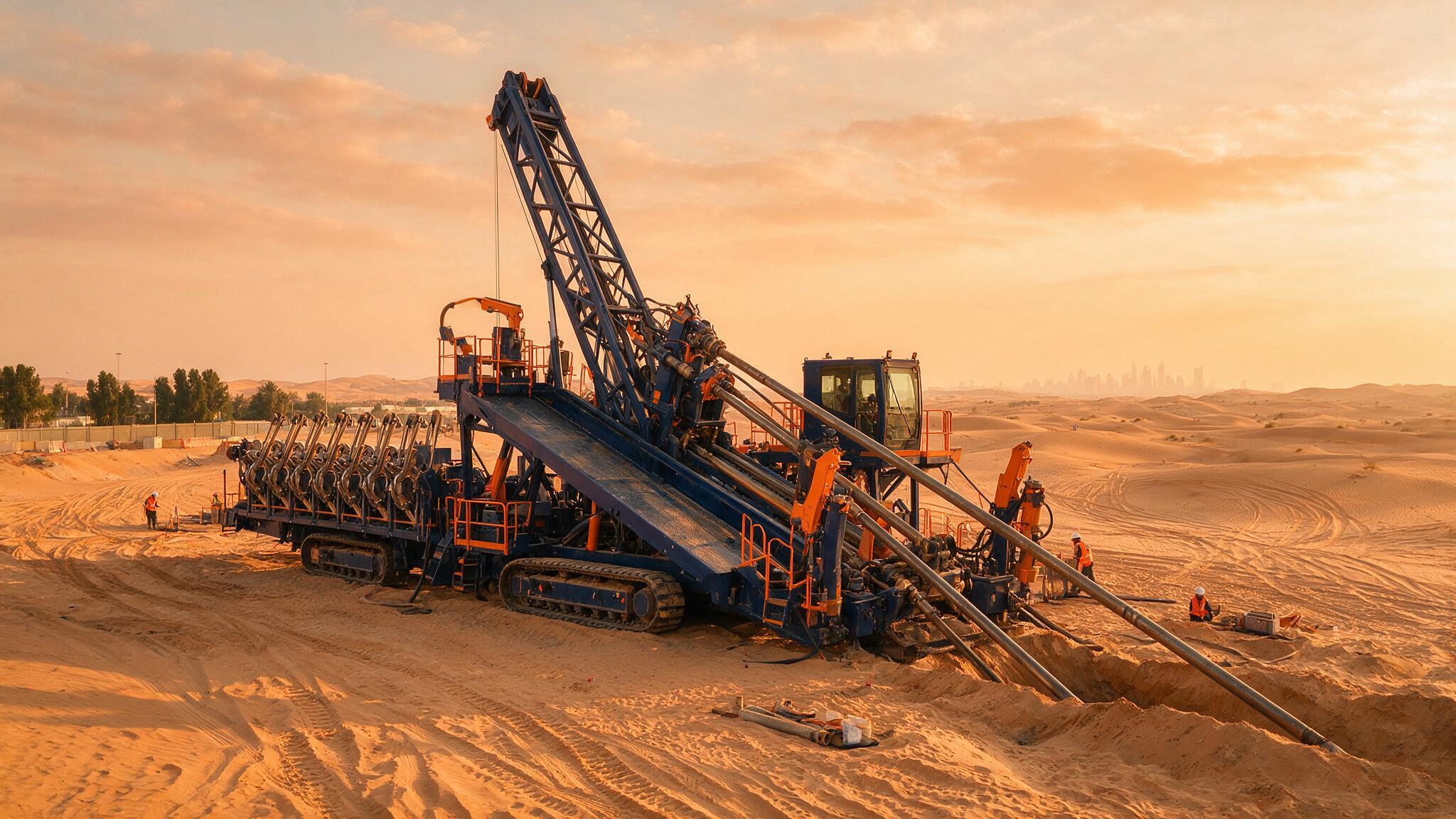
Herrenknecht HK 250T
Maxi rig, 250 ton pullbackOur heavyweight for long, large-diameter and sea channel crossings.
CAPABILITY 04 / 06 · Pipeline stringing & welding
Automatic welding, testing and stringing of the carrier pipe so the pullback is a single continuous operation with no stops for joints.
THE SCOPE
Pullback cannot wait for a welder. Once the reamed bore is open, the pipe must go in continuously or the hole begins to close. Crossroad builds the full pipe string before pullback: HDPE butt-fused on automatic fusion machines, steel welded and NDT-inspected on the string line, each joint recorded against its position in the string.
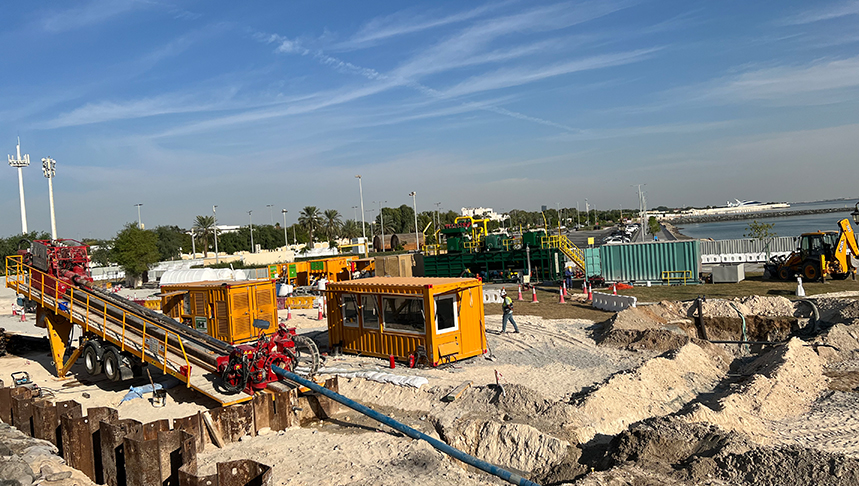
The string is laid out on rollers on the exit side, aligned with the bore exit angle, and hydrotested or pre-tested as the specification requires before the pull begins. Where the site cannot accommodate the full length, the string is built in sections with a planned tie-in stop. We coordinate the pipe supply, the coating and the testing contractor so the string is ready the day the reamer breaks through.
WHAT WE DELIVER
HOW IT RUNS
Pipe is inspected, logged and laid out on the string line in pull order.
Joints are made on automatic equipment with every parameter recorded; steel joints receive NDT.
The string is pressure tested and gauged before it ever enters the ground.
Pull head, swivel and rollers are set so the string meets the exit angle without stress.
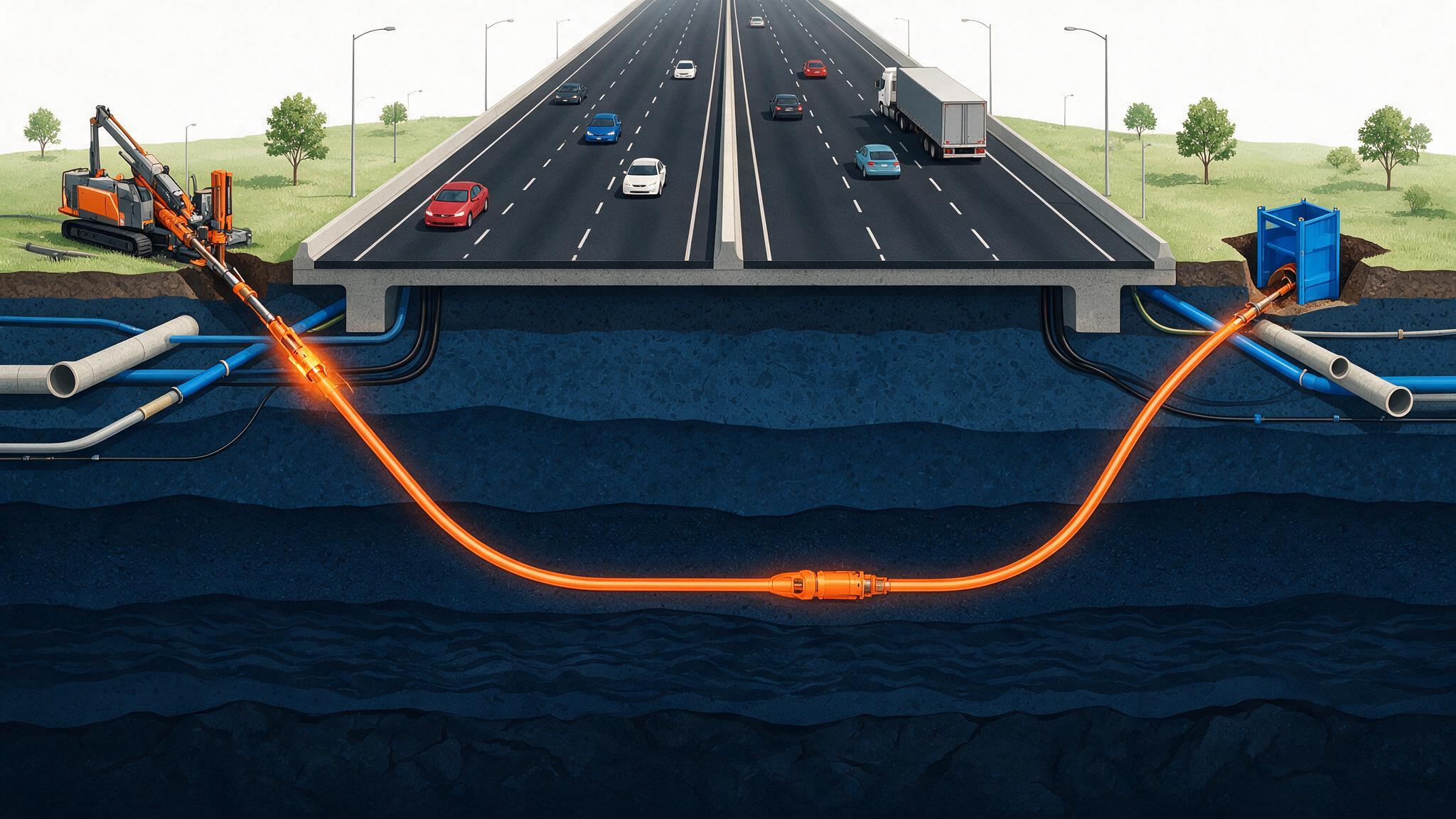
See the full four-stage bore animated on the home page, or size your own crossing with the HDD tools.
IRON ON THE JOB
Our heavyweight for long, large-diameter and sea channel crossings.
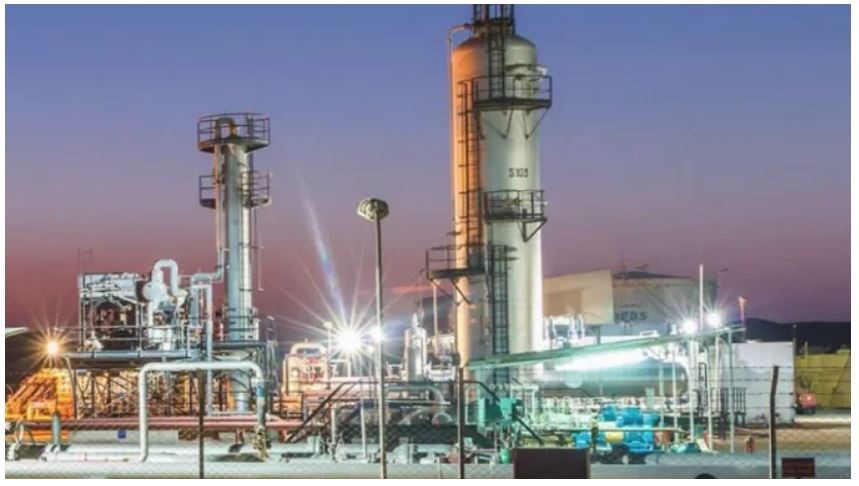
The workhorse for utility corridors and mid-range road crossings.

Automated welding for consistent, tested joints before pullback.
ON RECORD
STRAIGHT ANSWERS
Engineers answer every enquiry. If your question is not here, send it over.
It should not be. Every stop during pullback lets the bore relax and raises the pull load. We build and test the complete string first, and if the site is too short for the full length we design a single tie-in stop with the pipe pre-positioned.
We can install client-supplied pipe or procure it with the project. In both cases the pipe is inspected on receipt and every joint is logged against the string.
A pre-pull pressure test to the specification and a gauge check on steel strings. After pullback the line is tested again as part of handover.
READY WHEN YOU ARE
Send the location, length and pipe spec. You will hear back from an engineer, not a call centre.